What 733 kWh From Two Solar Panels Taught Us About Energy Optimisation

Energy transition discussions often focus on large infrastructure projects.
Gigawatt-scale solar farms.
Grid-scale batteries.
National policy frameworks.
But meaningful progress also comes from smaller, data-driven experiments.
Over the past year LDS created a practical experimental environment called the LDS Test Bed — a real-world platform where we test energy technologies and use the results to improve the modelling tools behind the LDS Energy Portal.
Our first experiment was intentionally simple:
A two-panel EcoFlow balcony solar system.
No large rooftop installation.
No commercial-scale solar array.
Just a small 800W system, similar to those increasingly becoming possible for households as regulations evolve around plug-in solar systems up to 800W.
After twelve months the result was clear:
733 kWh of solar generation from just two panels.
Key Results
System: EcoFlow Balcony Solar
Configuration: 2 panels (~800W)
Generation over 12 months: 733 kWh
That energy is roughly equivalent to:
- ~3,000 miles of electric vehicle driving
- ~£212 of electricity at typical UK tariffs (~29p/kWh) if self-consumed
- A measurable reduction in grid carbon emissions
For a system of this size, the result highlights something important:
Even very small solar systems can produce meaningful energy and valuable data.
However, the electricity generated was only one part of the experiment.
Why We Built the LDS Test Bed
When developing the LDS Energy Portal, one capability quickly became central:
The “What If” engine.
Organisations frequently ask questions such as:
- What if we added solar generation?
- What if we shifted electricity demand to different times of day?
- What if we introduced battery storage?
- What if EV charging was optimised?
These scenarios require reliable modelling.
But the most effective models are always grounded in real-world data.
The LDS Test Bed was created to generate exactly that.
Rather than relying purely on theoretical assumptions, we run live energy experiments and use the results to improve the optimisation and forecasting models inside the portal.
The System
The balcony solar experiment included:
- EcoFlow balcony solar system
- Two PV panels (~800W capacity)
- Continuous generation monitoring
- Solar forecasting tools
- Load forecasting models
This allowed us to analyse how real solar generation interacts with real energy demand.
The results feed directly into the modelling capabilities of the LDS Energy Portal.
Year One Generation Profile
The system produced 733 kWh across the year, following the expected seasonal solar pattern.
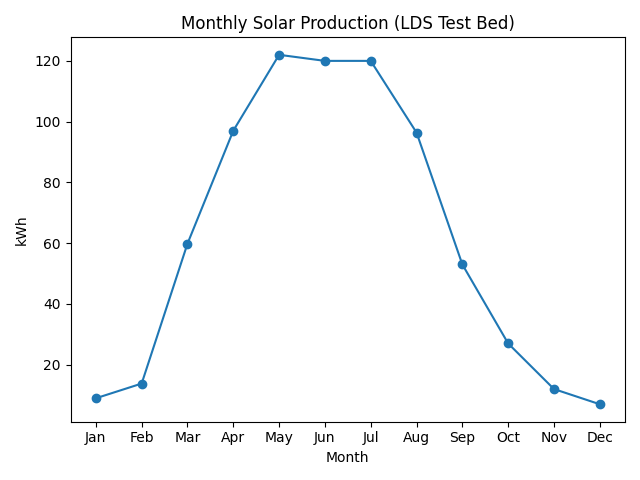
Generation peaked during late spring and summer, with May, June and July each producing over 120 kWh per month.
Even in winter months, the system continued generating useful energy, providing valuable insight into how small solar systems behave across the full year.
Why Small Solar Matters
Interest in balcony and plug-in solar systems is growing rapidly.
Regulatory changes across Europe are making 800W plug-in solar systems increasingly accessible, enabling more households to participate in energy generation without major installation work.
These systems offer several advantages:
- Minimal installation complexity
- Lower upfront cost
- Suitable for apartments and smaller homes
- Immediate participation in renewable generation
Our testing shows that even installations at this scale can generate meaningful amounts of electricity.
But their real value emerges when combined with data-driven optimisation tools.
From Experiment to Platform
The LDS Test Bed exists to support the development of the LDS Energy Portal.
The portal allows organisations and households to:
- monitor energy consumption
- track carbon emissions
- analyse energy costs
- explore “What If” optimisation scenarios
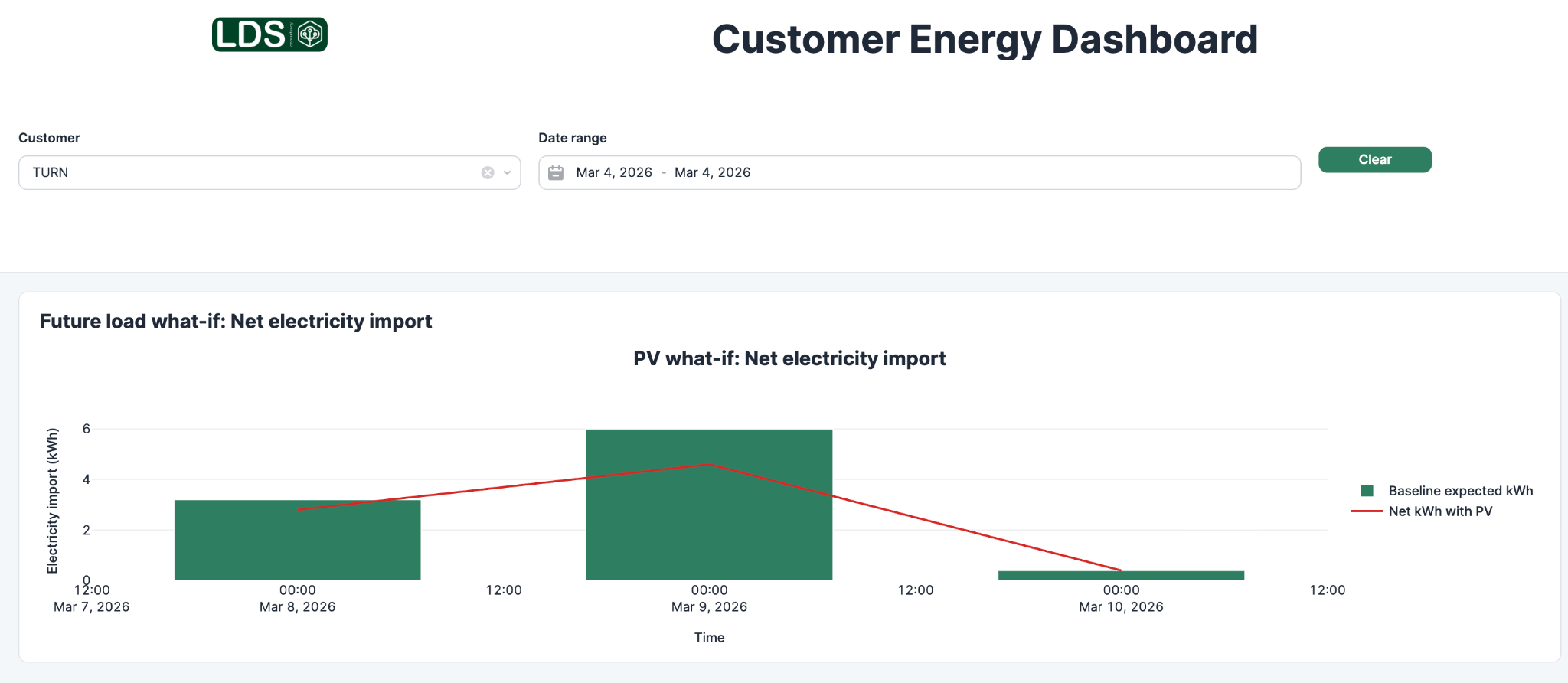
By combining energy consumption data with solar generation modelling, the platform can estimate how renewable energy changes both carbon emissions and grid electricity demand.
For example, the portal can compare actual carbon emissions with estimated emissions when solar generation is introduced, allowing users to quantify the environmental impact of renewable technologies.
Exploring “What If” Energy Scenarios
Monitoring energy is useful.
But optimisation requires scenario modelling.
One of the most powerful capabilities of the LDS Energy Portal is the “What If” modelling engine.
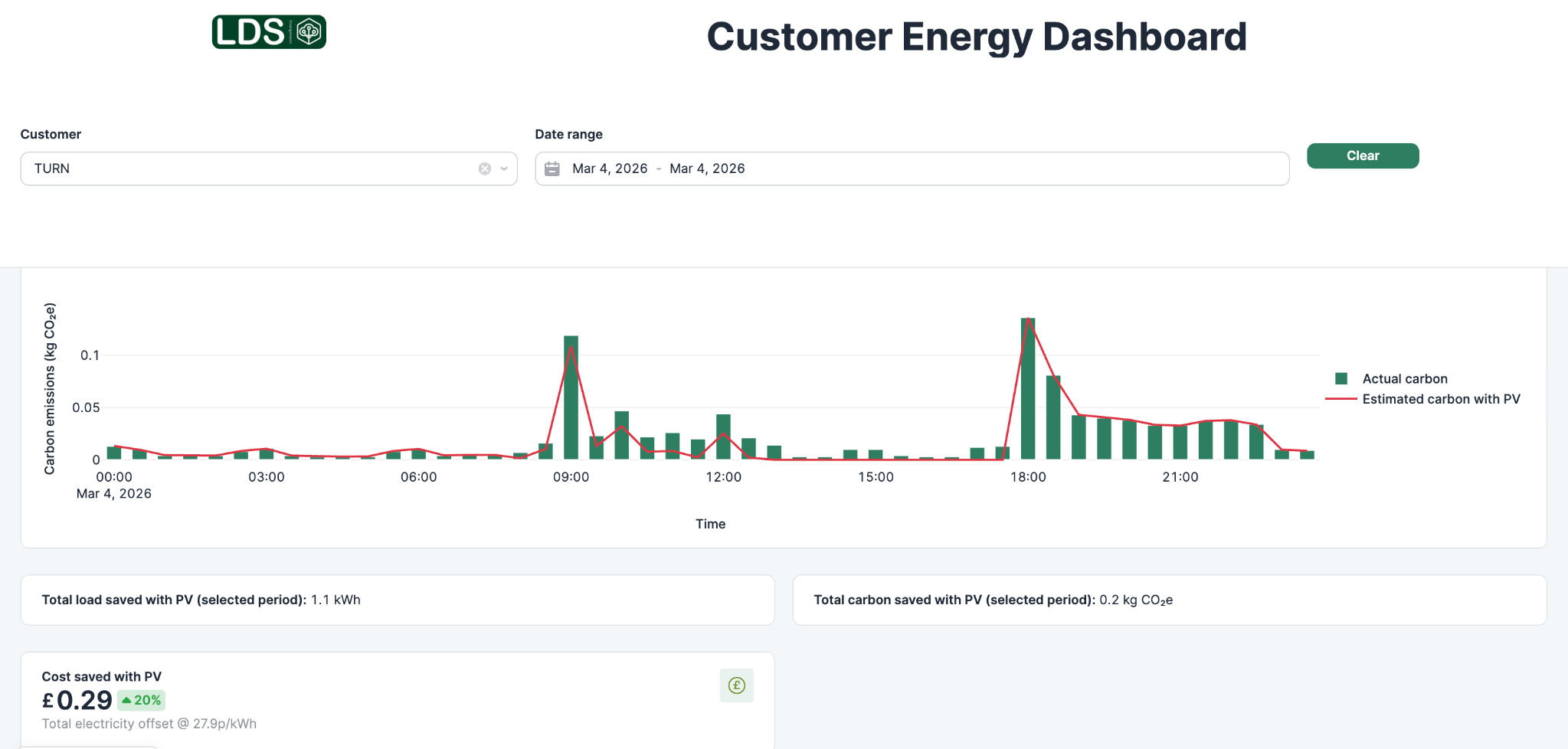
The system can compare:
- baseline electricity imports
- expected imports when solar generation is introduced
This allows users to understand how technologies such as solar PV influence:
- electricity imports
- energy costs
- carbon emissions
Rather than simply measuring energy use, the platform enables users to explore how their energy system could evolve.
What’s Next for the LDS Test Bed
The balcony solar experiment provided a full year of baseline data using fixed flat panels.
The next phase of the LDS Test Bed introduces solar tracking.
The system is being upgraded with a single-axis tracker, allowing the panels to follow the sun throughout the day rather than remaining fixed in a single orientation.
This will allow us to compare:
- fixed panel generation
- tracked panel generation
under the same environmental conditions.
The key question is simple:
How much additional energy can be generated simply by improving panel orientation?
The results will also allow us to explore how solar tracking influences:
- morning and evening energy production
- self-consumption potential
- optimisation strategies
These insights will feed directly into the modelling capabilities of the LDS Energy Portal.
Turning Data Into Insight
The LDS Test Bed demonstrates a simple principle:
Energy optimisation works best when models are informed by reality.
By running real-world experiments — from balcony solar systems to solar tracking — LDS can improve the accuracy of forecasting and optimisation tools.
As the dataset grows, so does the power of the insights.
Explore the LDS Energy Portal (Beta Access)
The LDS Energy Portal is designed to help organisations understand and optimise their energy systems by combining:
- energy monitoring
- carbon tracking
- cost analysis
- “What If” scenario modelling
The same modelling tools used to analyse our 733 kWh balcony solar experiment are now being integrated into the platform.
Beta Access Available
We are currently offering 10 organisations free beta access to the LDS Energy Portal.
Beta participants will be able to:
- explore energy and carbon insights
- experiment with optimisation scenarios
- test the platform in real environments
- help shape future features
Request a Beta Slot
If you would like to explore the LDS Energy Portal while it is in beta, we would love to hear from you.
We currently have 10 free places available.
📩 Email: enquiries@ldsconsultancy.com
Subject: Portal Beta Access
Include a short description of your organisation and how you are interested in using the platform.
Looking Ahead
The LDS Test Bed will continue to evolve with future experiments including:
- battery storage integration
- EV charging optimisation
- advanced forecasting models
- AI-driven energy optimisation
Because the most powerful energy decisions often start with a simple question:
What if?